


Contrary to many assumptions, purchasing decisions are rarely made spontaneously. They are influenced by various factors, including trust, everyday habits, and the environment in which people perceive brands. Ethnomarketing takes advantage of precisely this insight. Instead of reaching target groups through traditional mass media, people are met directly in their everyday lives. Those who feel understood are more open to messages and recommendations. In this way, brands can influence purchasing decisions directly or indirectly.
Trust is the foundation of every purchasing decision
Many brands have already recognized that high reach is of little use if the target group has no trust in the product. People prefer to buy something with which they associate positive things and with which they feel safe. Trust, therefore, plays a central role. However, this does not arise through individual advertising contacts, but through repeated, credible presence in familiar environments.
How can cultural proximity strengthen this effect?
Cultural proximity strengthens this effect. If the language, imagery, and the context in which the product is perceived match one’s own reality, the messages are accepted more quickly and questioned less critically. Anonymously placed advertising with posters or online ads often remains abstract. Advertising in familiar spaces where people shop or meet with friends, on the other hand, is perceived as a more familiar and positive part of everyday life.
An example: A brand is regularly perceived on a screen in a supermarket or a cultural association that people know from their everyday lives and trust. The advertising is not perceived as foreign or intrusive, but as part of an environment in which they repeatedly have positive experiences.
Ethnomarketing consciously uses this mechanism by prioritizing trust over reach.
How can the environment change perception?
The environment in which advertising appears directly affects how people perceive and process it. These are, among other things, the findings of advertising impact research. The impact of a message depends not only on the content but also on the context in which it is embedded. Thus, thoughts and emotions evoked by the environment influence how attentively people perceive information and how well they remember it.
What is the halo effect?
A relevant mechanism is the so-called halo effect: Characteristics of the surrounding context, such as its quality, tonality, or relevance, rub off on the perception of the embedded advertising. That is, if the context is positively charged, the advertising appears more credible and memorable. If the environment in which the message is transported is perceived as disruptive, product perception also suffers.
That’s why mass advertising has so much wastage
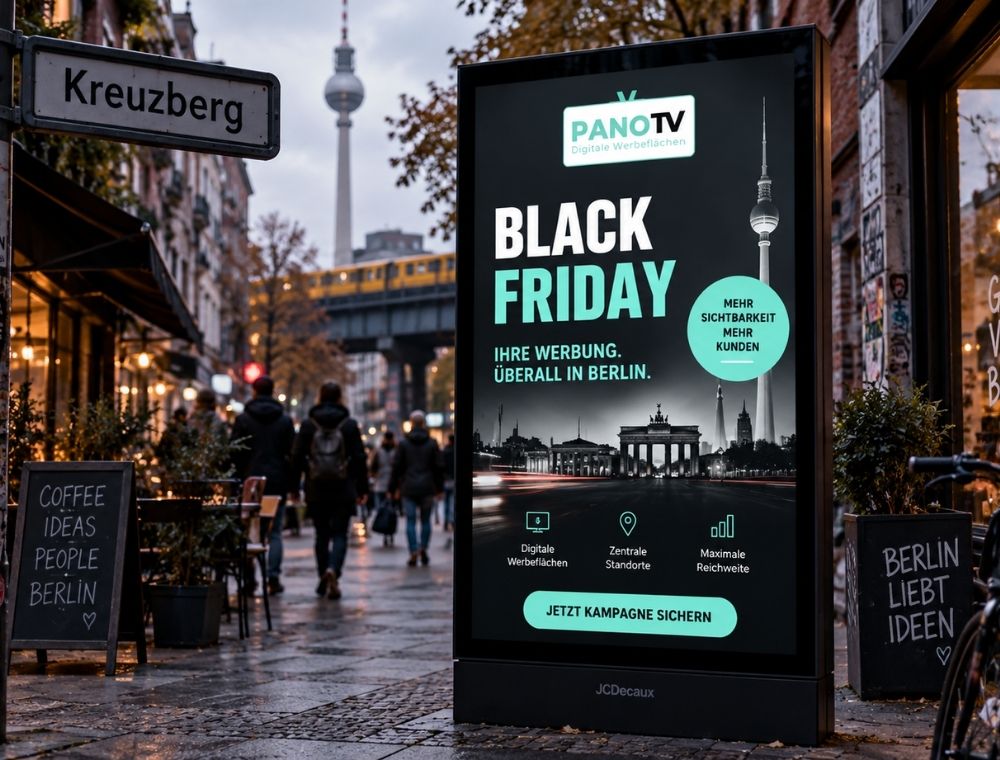
If one considers classic advertising spaces such as large-format ads, posters, or online banners, which are played out in packages of 1000 via various channels, in this context, then it becomes clear why the desired effect is often absent here. Posters are perceived in the noisy pedestrian zone, where people are stressed by traffic noise and under time pressure. Here, an advertising message is directly embedded in a negative context and must also compete with many other sensory impressions.

Why repeated brand contacts are so important
Purchasing decisions rarely arise directly from the first contact with a brand. They develop steadily over time through repetition. It is important that there are regular visual contacts, but without immediate purchase pressure. They are perceived very differently by the target group than one-time campaigns that are played out with a high presence and volume. The brand is not actively evaluated, but gradually stored in the memory as known and familiar.
A concrete example:
In a café that serves as a meeting place for cultural encounters, a screen regularly shows advertisements for a local brand. Visitors come here several times a week, wait, chat, drink coffee. The advertising message appears again and again in the same positive environment without imposing itself. Genau diese wiederholte Wahrnehmung im vertrauten Kontext sorgt dafür, dass sich die Marke einprägt.
If interested parties from this target group later face a purchasing decision, then this brand is already present and familiar. Not as impersonal advertising from a brochure, but as a known quantity from everyday life.
What is the significance of cultural appeal for the purchasing decision?
Advertising only works if it is understood – and that concerns not only the language but also the tone, the imagery, and the values it conveys. If these elements match one’s own reality, then proximity arises. The message seems more relevant and credible because it does not have to be explained in a roundabout way.
If this fit is missing, then the advertising information is often internally sorted out because it seems “not made for me.” A culturally sensitive approach reduces precisely this distance. It signals respect and understanding and thus creates the important foundation for trust.
For the purchasing decision, this ultimately means: People are more likely to choose brands where they have the feeling of being seen and taken seriously. Ethnomarketing uses the context in which a cultural affiliation is a matter of course.
How is ethnomarketing implemented correctly?
Decisive for successful ethnomarketing are three factors: the right place, a respectful approach, and continuous presence. Instead of reaching as many people as possible at the same time, the primary goal is to address the target groups where they regularly spend time. Content must be understandable and culturally sensitive and avoid clichés or exaggerated messages.
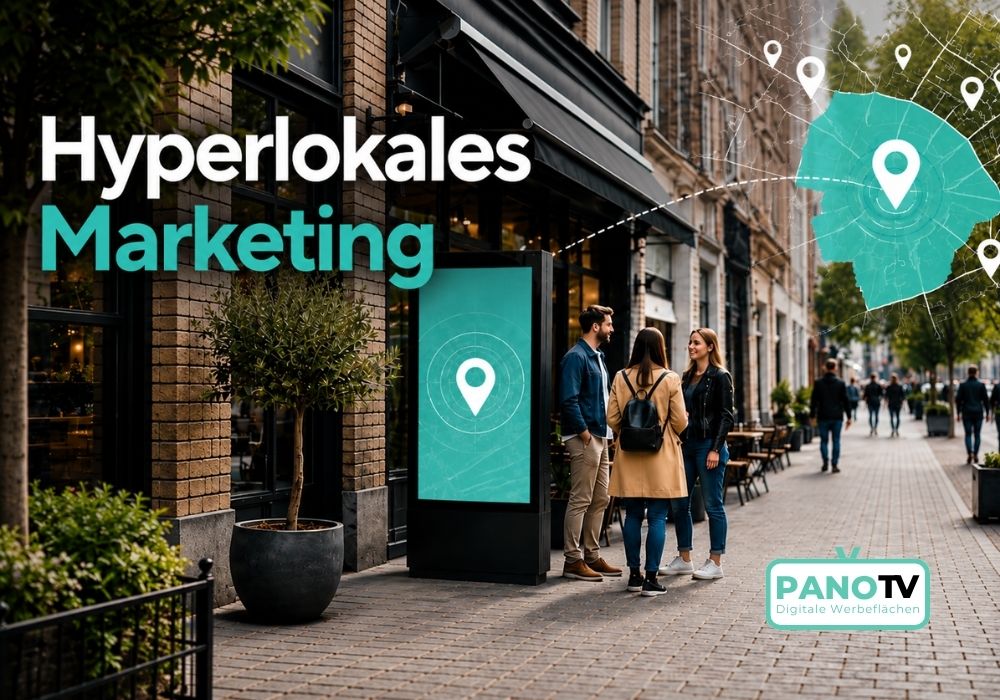
PanoTV implements exactly this principle. Through digital screens in mosques, cultural associations, supermarkets, cafés, or barbershops, brands become visible in familiar community environments. The playback takes place regularly and unobtrusively, so that messages can solidify through repeated visual contacts. At the same time, the content can be specifically adapted at any time. Partner locations also benefit themselves by, for example, advertising their own promotions and offers on the screens.
Advertisers or potential location partners can contact us directly online.