


Germany is diverse, and so are the people who live, shop, and make purchasing decisions here. Companies that want to advertise successfully today must take this reality seriously. Their messages will only reach their target if they fit into people’s lives. Ethnomarketing does not address culturally influenced target groups in general, but exactly where they feel at home, with an understandable language and respectful communication. In particular, small brands that take this step gain visibility and trust among these people – and that is more important than ever today.
What exactly is ethnomarketing?
Ethnomarketing means that advertising messages are not created and played out generically, but take seriously the origin, language, and cultural experiences of the people who are supposed to see them. The target groups should be reached in their everyday lives; in the environment that shapes their identity.
The crucial difference:
- Classic advertising tries to reach as many people as possible at the same time.
- Ethnomarketing consciously creates closeness with messages that feel familiar
A simple example:
A local optician wants to advertise new lenses with blue light filters. In classic outdoor advertising, the ad runs somewhere in the city center. Many people see it, walk past it, and don’t feel addressed because, in the rush, they don’t even understand that they too can have a real advantage from these special lenses. The message rushes by.
However, if the same advertisement is played out in a barbershop, a completely different added value is revealed. Many young people regularly stay here, spend time together, are relaxed, and open to this content. A short animation explains how the eyes are protected when gaming or consuming social media. The tonality is familiar, and the spot is translated into several languages.
Suddenly, relevance arises: “This concerns me – exactly me.”
And above all: “I even know the optician, he’s in the neighborhood.”
For many people of Turkish, Arab, or Kurdish origin in Germany, being together in communities is an important part of life. People meet in familiar shops, speak the language of their parents, share similar values and traditions. It is precisely in this center that people are open to messages that actually reflect their reality.
How big is the potential?
In Germany, around 25.2 million people have a migration background, which corresponds to approximately 30.4% of the total population. Within these groups, the largest group of origin is that with a Turkish migration background – currently around 2.9 million people. These communities make a significant contribution to economic output in Germany and, as consumers, shape entire industries.
Why is this potential not exploited by classic advertising? Because many campaigns are designed generically. They appeal to a broad mass and are not tailored to the cultural living environments of these groups.
The psychological dimension: How advertising works in familiar spaces
People do not automatically pay attention to advertising. They decide in a few seconds whether a message is interesting to them or not. The location also plays a crucial role here. Content that appears in a familiar environment is not perceived as a foreign body. Instead, they are part of the social space that one is already familiar with.
This psychological proximity lowers the threshold for engaging with a message. Brands that show themselves in such a context therefore benefit from a kind of trust bonus. Advertising messages do not feel like advertising, but rather like a hint or recommendation from one’s own environment. An emotional connection is created that can never be bought with even larger poster areas or even more reach.
PANO TV is the new partner for successful ethnomarketing
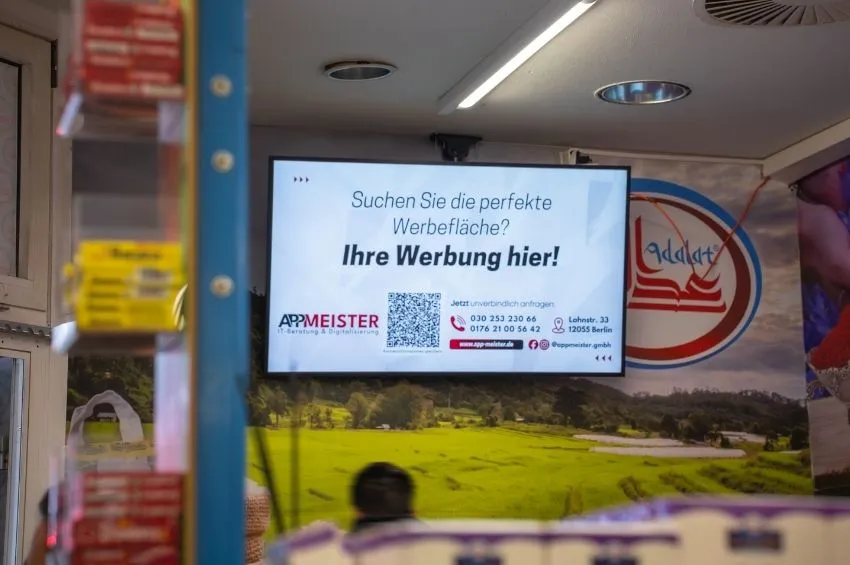
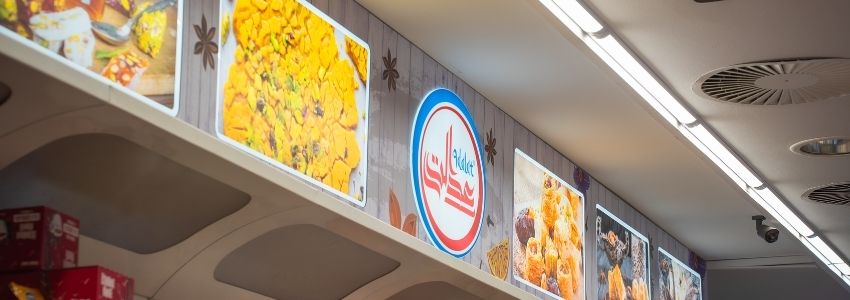
In order for ethnic target groups to really be reached, in addition to cultural understanding, there also needs to be direct access to the right places. This is exactly where PANO TV comes in. The network combines modern digital-out-of-home advertising with a deep understanding of the importance of community spaces. Brands can place their content where it meets open and interested people.
This is how ethnomarketing becomes successful with PANO TV:
- Visibility in real everyday life instead of in anonymous traffic areas
- High recognition through regular playout in a familiar environment
- Respectful communication in languages and images that are understood
- Measurable results through clear planning and targeted placement
- Fair access also for smaller companies that want to grow locally
This is how a good product quickly becomes a familiar brand.
What will the future of ethnomarketing be like?
Diversity is no longer a special case, but shapes the social reality in Germany as a whole. Brands that continue to think only in general target groups are increasingly missing the mark with their advertising messages. The future of successful communication lies in more differentiated messages.
Ethnomarketing is currently changing from a niche approach to a strategic basic requirement for successful advertising. It enables companies to show a cultural connection to the communities and to build a relationship with them that goes beyond mere product information. Trust, cultural proximity, and a comprehensible added value will become the strongest currencies in brand communication.
PANO TV is actively accompanying this development from now on. The network is growing to where communities are strongly anchored, making digital out-of-home advertising possible exactly where classic media do not work. The sooner brands take advantage of these opportunities, the stronger they secure their position in an environment that will become even more diverse and demanding in the future.
Anyone who now enters ethnomarketing with PANO TV gains sustainable competitive advantages.