


Flyers are placed in many shops, waiting areas of medical practices, or on counters. Most of the time, they go unnoticed and eventually end up in the trash. Relevant advertising therefore requires more than mere presence. Messages need to be visible without being intrusive — and that is exactly where the key advantage of digital screens lies.
Why are traditional flyers losing their effectiveness?
Flyers are quick to print and distribute — which is exactly why they have been used in many areas for years. The problem is that people’s focus has changed. Today, when someone enters a space, they are confronted with many stimuli at the same time. Loud conversations and phone calls, ringing smartphones, colorful posters — all of this creates so much distraction that there is hardly any attention left for printed advertising materials.
Another factor is the impact of the medium itself. Paper is static and quickly becomes outdated. Offers change, promotions expire, and content loses its relevance — yet the flyer still remains. This creates visibility on paper, but rarely generates real attention or a lasting impact.
The problem of scatter loss and lack of relevance
Flyers are noticed by many people — but often not by the right ones. They are placed in locations where a wide variety of people pass by, without any clear indication of whether the message is even relevant to them. This leads to a lot of scatter loss: the advertising is there, but it doesn’t actually reach anyone.
Flyers are often distributed without any real connection to their surroundings. However, a message is significantly more effective when it appears in a relevant context. Without this connection, advertising feels generic and interchangeable. That is exactly why it is no longer enough to simply be visible — what truly matters today is where and at what moment people perceive a message.
Why community spaces are a special place for advertising
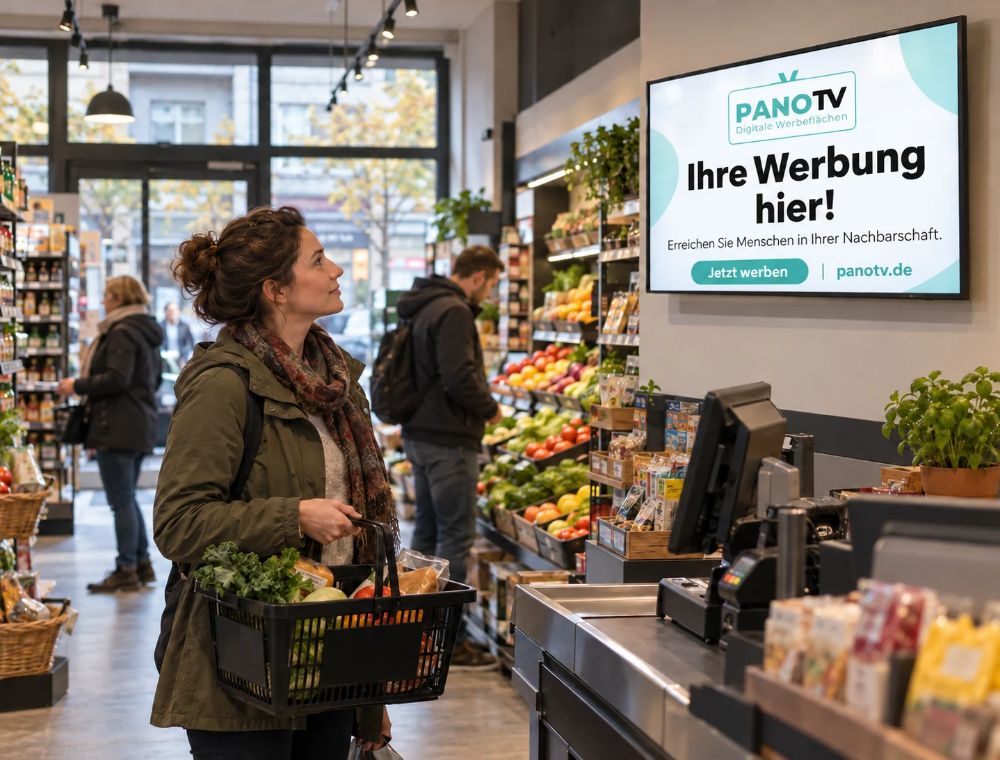
Community spaces function differently from traditional advertising locations. People don’t spend time there by chance; they come intentionally — to shop, to have conversations, or simply as part of their social routine. They spend time in a relaxed, comfortable atmosphere and perceive information very differently than they would on the street or in passing.
Typical community spaces include, for example:
- Mosques and cultural associations
- Local supermarkets and markets
- Cafés and restaurants
- Barbershops and hair salons
- Waiting areas in medical practices or service businesses
These places are associated with values such as trust, routine, and social closeness. People are familiar with the environment, feel comfortable there, and are under less time pressure. As a result, their internal resistance to advertising decreases significantly. Messages are not perceived as intrusive, but rather as part of the environment. This openness is exactly what makes community spaces a particularly effective setting for subtle advertising that truly resonates.

What specific advantages digital screens offer compared to flyers
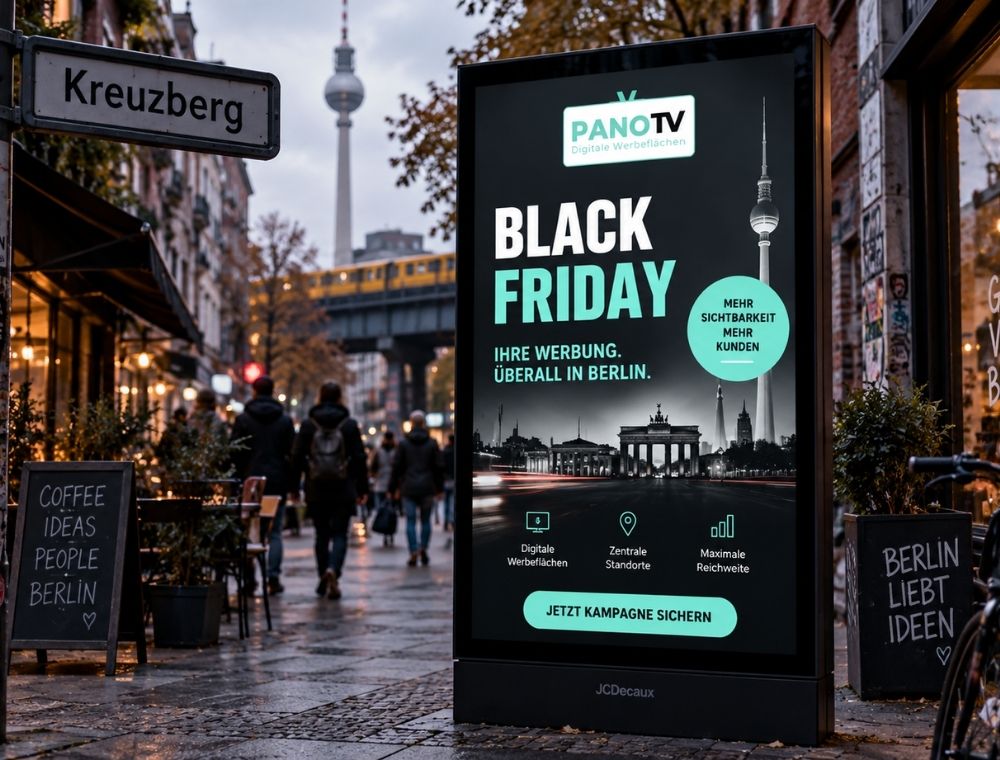
Compared to flyers, digital screens create a form of visibility that fits much better into today’s everyday life. They attract more attention, appear more modern, and can be flexibly adapted to different content. While a flyer is, at best, only picked up briefly, digital messages remain present in the space for a longer time.
The advantages at a glance:
- High visibility through motion, light, and changing content
- A modern and high-quality presence in the space
- Content can be updated or replaced at any time
- Multiple advertising messages can be displayed in rotation
- No paper consumption and no unnecessary waste
- Regular repetition without additional effort
- Better integration into the daily life of the target audience
A key advantage of digital screens is repetition. People don’t see the content just once, but multiple times — while waiting, shopping, or during a conversation. These repeated visual exposures — also known as the mere exposure effect — ensure that messages are better remembered.
Which companies benefit most from digital signage in community spaces?
This format is particularly effective for providers whose services rely heavily on trust. In places where people spend time regularly, attention and recognition develop almost naturally.
- Local service providers connected to people’s everyday lives
- Supermarkets and ethnic discount stores with high daily foot traffic
- Family-run cafés and restaurants as social gathering places
- Barbershops and hair salons with regular loyal customers
- Cultural associations and community centers with strong ties
- Providers who want to target migrant audiences in a focused and respectful way
Especially in these spaces, repeated exposure occurs within a relaxed atmosphere. Advertising is not just glanced at in passing, but perceived as a natural part of the environment. That is exactly what makes digital screens in community spaces so effective.
PanoTV. Digital visibility exactly where people truly look
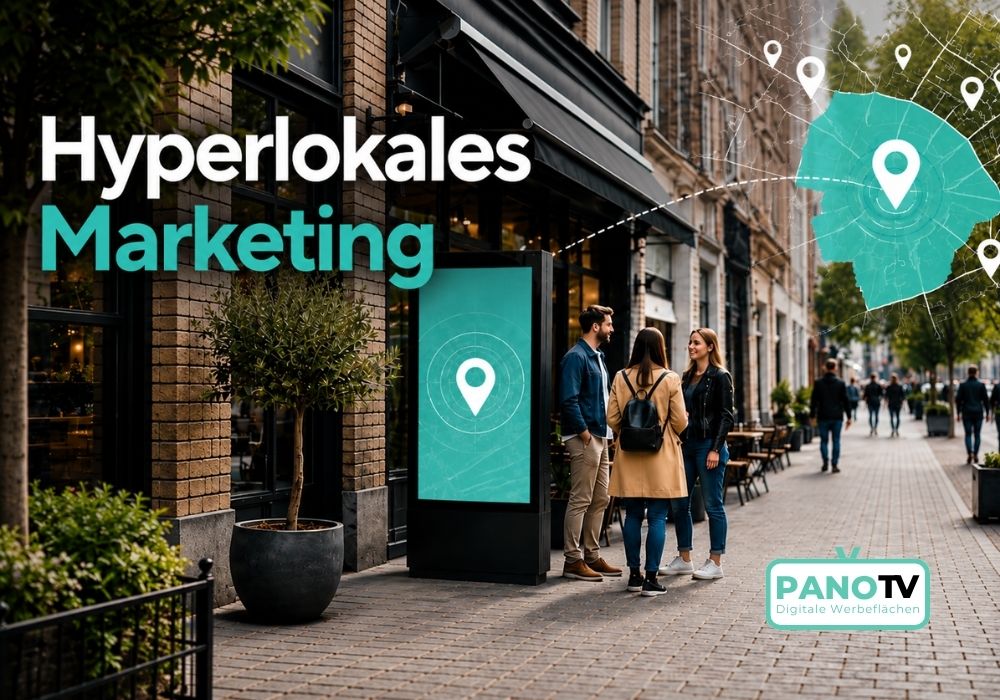
PanoTV brings digital advertising exactly to the places where people regularly spend time and are open to relevant content. Instead of relying on anonymous reach, PanoTV focuses on screens in community spaces — in markets, barbershops, cultural associations, or family-run cafés. This creates visibility in an environment that feels familiar and where people are receptive to messages.
For businesses, this means advertising can be delivered in a targeted way with minimal scatter loss, remains flexible, and can be implemented effectively even with a manageable budget. Content can be updated at any time, tailored to specific locations, and placed without unnecessary waste. If you want to reach your target audience where they truly pay attention, you can request your campaign directly from PanoTV or become a partner location.