

Many companies invest a great deal of money in advertising, yet still fail to achieve the desired results. There is still a widespread belief that larger budgets automatically lead to more successful campaigns. However, if the advertising message reaches the wrong target audience at the wrong time, even the most generous advertising budget will be of little use.
This is exactly where hyperlocal marketing comes in: Instead of trying to reach as many people as possible, the aim is to be present precisely where your target audience regularly spends time and makes purchasing decisions.
What Does Hyperlocal Marketing Mean?
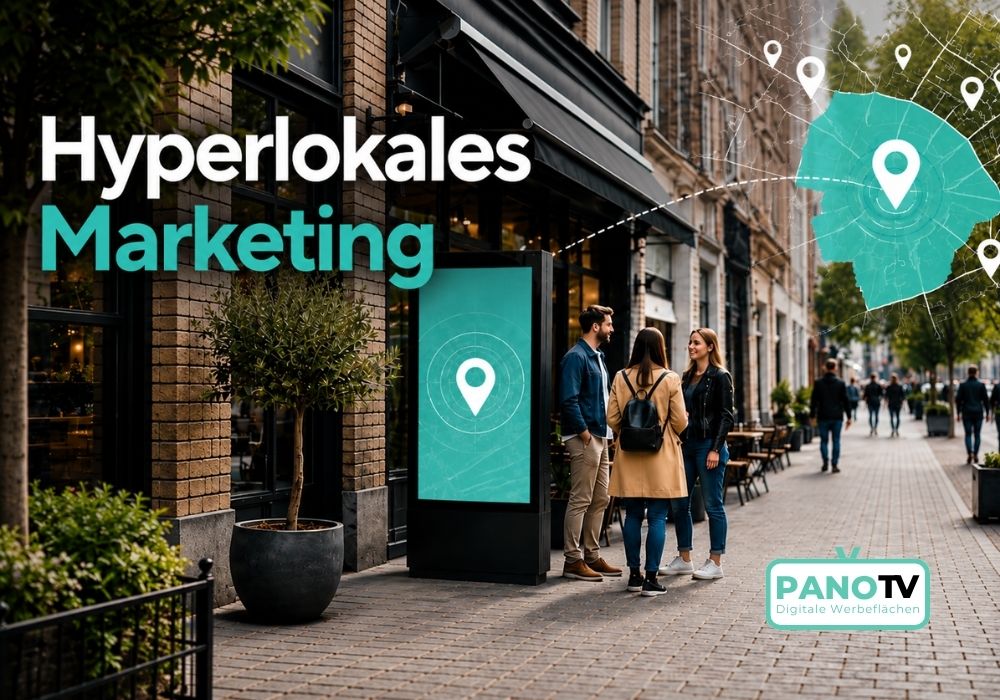
Hyperlocal marketing does not aim to achieve the widest possible reach through high advertising spending. Instead, campaigns focus on a clearly defined geographical area. Rather than targeting entire cities or regions, advertising is directed specifically at people in individual neighbourhoods, districts or even particular locations. Hyperlocal marketing aims to reach potential customers exactly where they spend their daily lives.
Typical micro-locations for hyperlocal marketing include:
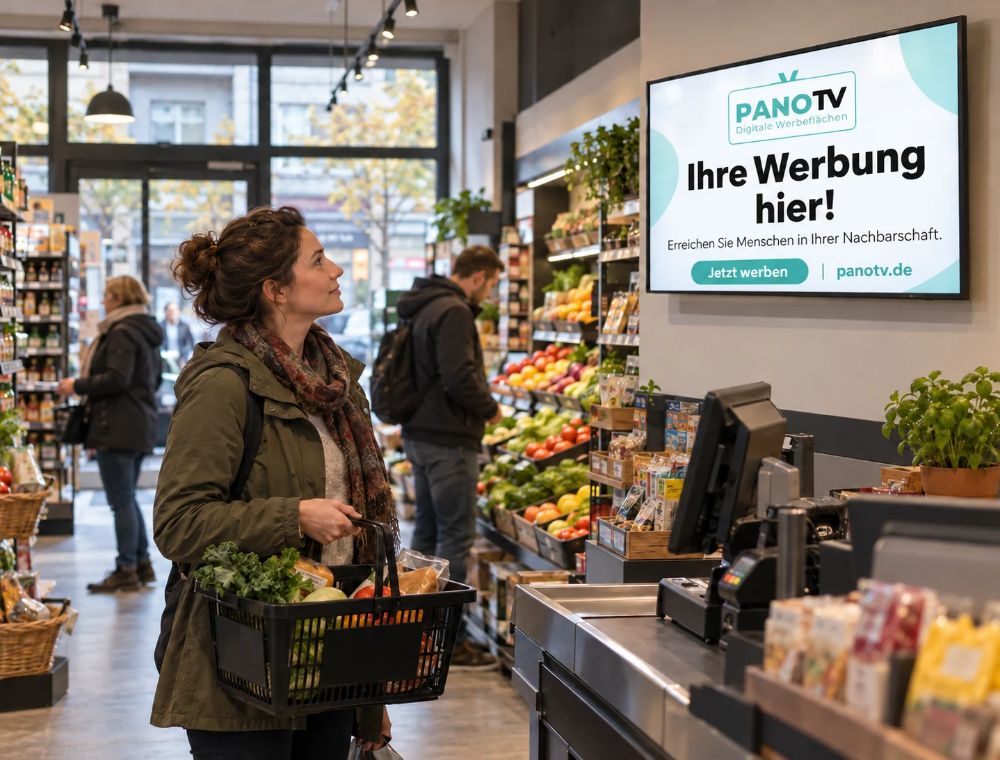
- Supermarkets where people shop regularly.
- Cafés and restaurants that serve as social gathering places.
- Barbershops where customers spend time waiting for their appointment.
- Cultural associations that bring together people with shared interests and values.
- Mosques that are an integral part of everyday life for many visitors.
The closer advertising is placed to the target audience’s actual living environment, the more relevant it is perceived to be. This is precisely what makes hyperlocal marketing an effective alternative to traditional mass advertising for many companies.
Why Reach Does Not Automatically Mean Successful Advertising
A high reach initially only means that many people see an advertising message. Whether this actually results in new customers, however, depends on whether the advertising reaches the right target audience. The more broadly a campaign is distributed, the greater the likelihood that a significant portion of the advertising budget is spent on people who are not interested in the offer at all.
In addition, people’s attention is limited. Every day, they are exposed to countless advertising messages. As a result, many advertisements are barely noticed anymore. Advertising therefore has the greatest impact when it is relevant to the respective target audience and appears in a suitable environment. A strategically chosen location is often far more valuable than simply achieving the highest possible number of advertising impressions.

Micro-Locations: Where Genuine Visual Contact Happens
Not every advertising contact has the same value. What matters is the situation in which people encounter an advertising message. Micro-locations are characterised by the fact that visitors regularly spend time there rather than simply passing by. This creates much better conditions for advertising to be consciously noticed.
Another advantage is repetition. People who see the same message several times in a familiar environment are more likely to remember the advertised brand or service later. At the same time, advertising content in a suitable setting feels more natural and less intrusive than traditional mass advertising.
Instead of trying to reach as many people as possible with a single campaign, hyperlocal marketing focuses on high-quality impressions. Advertising appears where it is relevant to the target audience and naturally fits into everyday life.
Why Communities Influence Local Purchasing Decisions
Purchasing decisions are often not made through advertising alone. Recommendations from family, friends or people in one’s personal circle play a crucial role. At the same time, trust develops in places where people regularly spend time and feel comfortable in their surroundings.
When people repeatedly encounter a brand in familiar places, it is easier to remember and is perceived as part of everyday life. This combination of trust, personal connection and repeated impressions is precisely what makes communities an important factor in local purchasing decisions.
Which Companies Is Hyperlocal Marketing Suitable For?
Hyperlocal marketing is particularly suitable for companies whose products or services are closely connected to everyday life or a specific region. Instead of targeting a broad audience, they reach their target group exactly where purchasing decisions are prepared or made.
Those who benefit most include:
- Restaurants and Cafes
- Doctors and pharmacies
- Insurance companies and financial service providers
- Real estate companies
- Mobile network providers
- Banks
- Retailers
- Local tradespeople and service businesses
For these industries, reaching the right people in the right environment is more effective than using a large advertising budget to achieve the widest possible reach.
How PanoTV Supports Companies with Hyperlocal Marketing
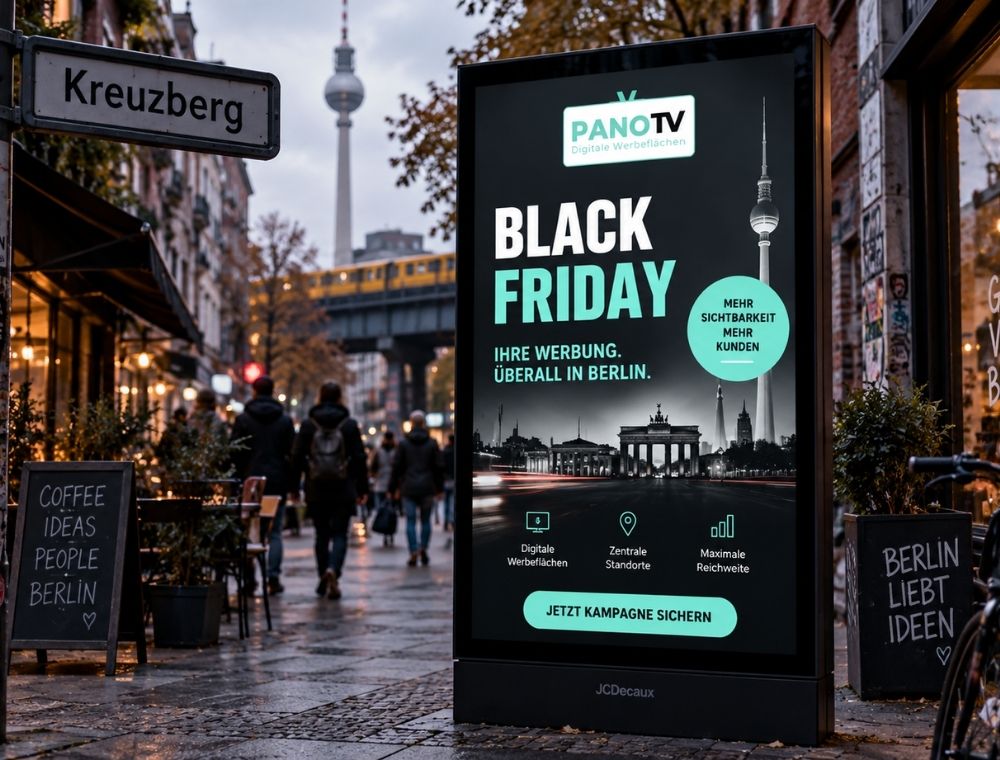
PanoTV implements the principle of hyperlocal marketing through a digital display network at high-traffic community locations across Berlin. The screens are installed in places such as supermarkets, barbershops, cafés, cultural associations and mosques—locations that many people visit regularly. This allows advertising messages to be placed directly within the target audience’s everyday environment while reducing wasted reach compared with broadly distributed forms of advertising.
The content displayed on the screens is managed centrally and can be flexibly adapted to individual campaigns or locations. This enables companies to reach people of Turkish, Arab or Kurdish backgrounds in a familiar environment. At the same time, partner locations benefit from screens installed free of charge and a share of the advertising revenue. In this way, a network is created that provides added value for both advertisers and participating locations.